The Update Wall: Why Plugin Releases Break Real Commerce

redxtrm
Full-stack developer and business consultant specializing in Next.js, React, and e-commerce solutions.
I do not dislike WordPress or WooCommerce. I used them because they solve a real problem: you can ship a store quickly. The update wall appears later, when the store stops being a simple catalog and starts carrying the operational weight of the business.
In a cap-commerce build, checkout is not just "pay for product." It may include quantity breaks, material-specific costing, artwork review, quote conversion, production notes, file uploads, shipping assumptions, role-specific prices, and invoice rules. Every one of those decisions becomes part of the checkout path.
Now add plugins.
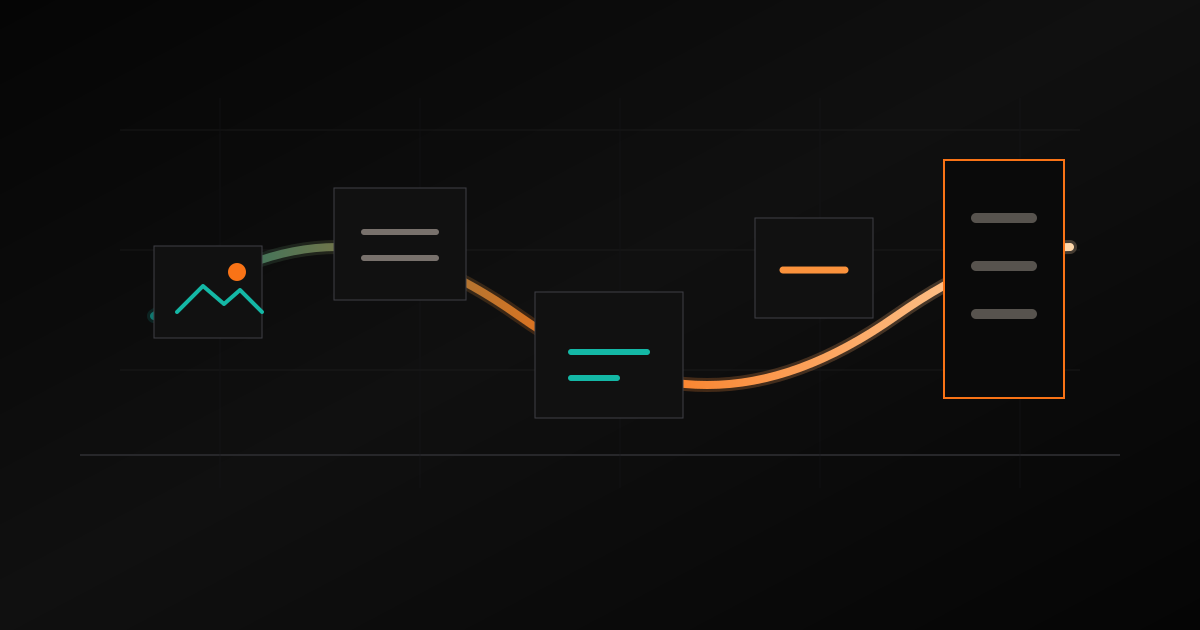
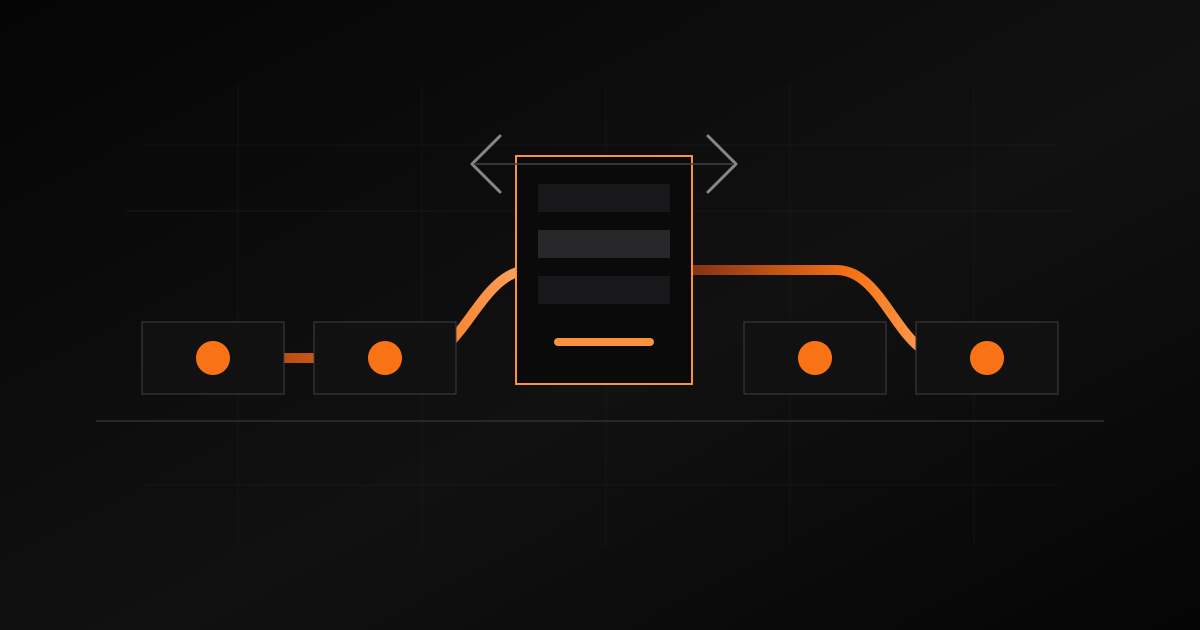
A payment plugin updates. A shipping plugin updates. The theme updates. A PDF or invoice plugin updates. A custom snippet depends on one of their hooks. Each vendor is solving its own release, but your checkout is where all of those releases meet.
That is the update wall.
Why It Hurts
The risky part is not that updates exist. Updates are necessary for security and platform health. The risky part is that the most important business flow often lives across code you do not fully own.
When that happens, every update becomes a question:
- Did checkout still calculate the same tier price?
- Did the file upload field still attach to the order?
- Did the invoice PDF still render the production notes?
- Did the shipping rule still apply to wholesale buyers?
- Did a template override silently stop matching the new plugin version?
For a simple store, this is annoying. For an operation with production, export, wholesale, and custom quoting, it becomes business risk.
The Custom-System Difference
In a custom system, updates still happen. The difference is control.
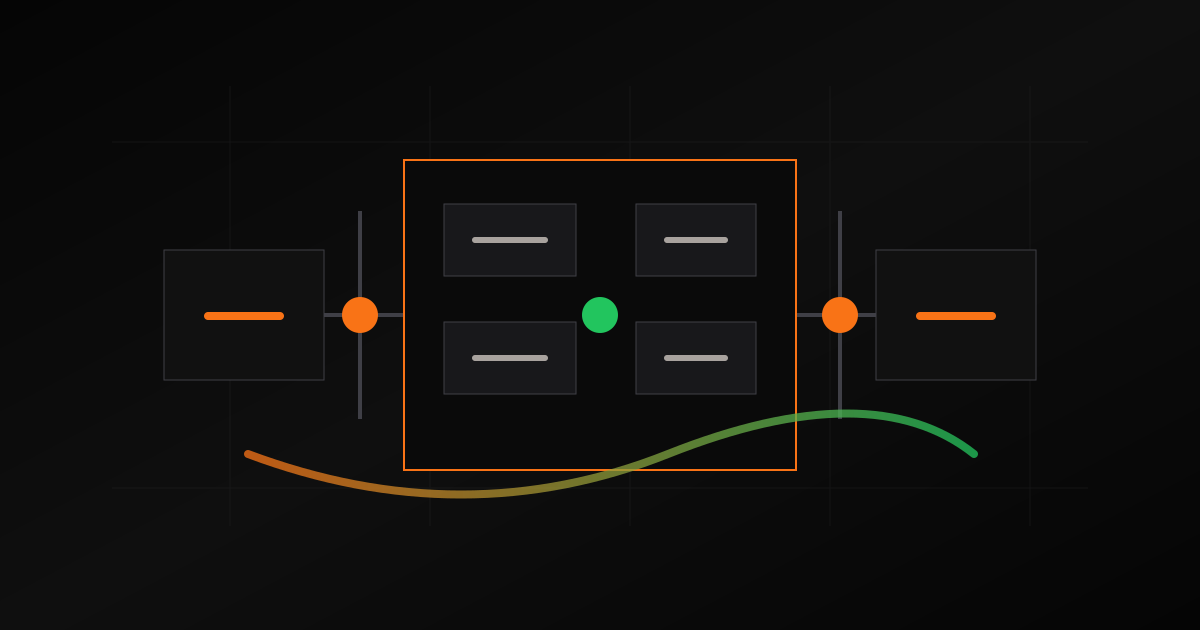
The critical path can be owned as application code: pricing functions, checkout state, quote approval, payment capture, invoice generation, file storage, and order status changes. Third-party services still exist, but they sit behind clear boundaries instead of owning the workflow.
That changes how maintenance works:
- Dependencies are pinned and upgraded intentionally.
- Staging receives updates before production.
- Smoke tests check the actual business flow, not just whether the homepage loads.
- Rollback is planned before the release.
- If a bug appears, the fix can happen in your codebase instead of waiting for a plugin vendor.
This is not about avoiding third-party software. It is about deciding what the business cannot afford to outsource blindly.
What I Watch For
When I review an existing commerce stack, I look at the update surface before I look at the design.
The warning signs are usually clear: checkout behavior spread across too many plugins, pricing hidden in admin-only settings, custom snippets with no tests, theme overrides touching plugin templates, and no staging process that mirrors production.
If the store is small, that might be acceptable. If the store is becoming an operating system for the business, it is a sign that the architecture is already stretched.
The Practical Rule
Own the part of the system where mistakes cost money.
Let commodity tools handle commodity work. Let payment processors process payments. Let email providers send email. But keep your order logic, pricing rules, customer roles, and production workflow inside a system you can inspect, test, and repair.
That is how you get past the update wall: not by refusing updates, but by making them controlled engineering events instead of surprises.
Tags